The future that is already here, hybrid cars

One of the leading automotive trends of the 21st century has become the drive towards electromobility. Growing awareness of the dangers linked to the use of fossil fuels means that petrol cars are increasingly being pushed aside by hybrid cars. What does that mean for you as a driver? Find out by reading this article!
How do hybrid cars work?
As the name suggests, a hybrid car uses two types of power source. The goal of this solution is to reduce the amount of fuel burned, which brings two basic benefits:
it lets you save on ever more expensive petrol/diesel,
it reduces the amount of pollutants emitted into the atmosphere.
The advantage of hybrid vehicles over fully electric cars is their significantly greater range, which considerably increases their practicality. Thanks to this, you can move around the city with low emissions every day, and on a longer journey you won't have to worry about the battery running flat.
The hybrid engine, how does it work?
The answer to this question is more complicated, because there are many types of hybrid cars. What does that mean for the individual drivetrains? The degree and the way in which electric power is added to a conventional petrol engine differ depending on the method used. However, a few elements are always shared. The way a hybrid engine works is based on the use of a battery, a generator and an electric motor. Let's take a closer look at the individual types of hybrid cars.
Fully electric cars (BEV)
Although it doesn't actually meet the definition of a hybrid vehicle, it's worth describing how it works, because the operation of the electric motor is the same in every hybrid. The chemical energy stored in the battery is converted into an electromagnetic field, which sets in motion a rotor connected to the mechanism that turns the wheel axle. This is actually a very simple technology dating all the way back to the 19th century. Why didn't electric vehicles become popular earlier? The reason was low battery capacity, but today, thanks to the use of lithium-ion batteries,it is possible to produce electric cars with a range of up to 600 km.
Hybrid cars (HEV)
The basic type of hybrid car is based on the combustion engine being assisted by an electric motor, which is charged during braking. Storing energy in the battery is handled by recuperation, i.e. braking with the help of the electric motor. In hybrid cars this process happens automatically, every time you brake. It's an intelligent solution that lets you recover surplus energy that is used up especially during city driving, e.g. when frequently stopping at traffic lights. HEV-type hybrid cars don't require charging from an external source, and over short distances they allow you to drive on the electric motor alone.
Mild hybrid (mHEV)
A completely different type is the so-called mild hybrid, whose job is not to eliminate fuel combustion but to improve the car's performance. The energy source here is also recuperation, but in this case the electric motor is so small that it wouldn't be enough to power the car on its own. It serves as an additional rotor that helps with dynamic starts and boosts power in high-demand situations.
Plug-in hybrids (PHEV)
If you have your own charging station, this type of hybrid car will be the most economical choice for you. The PHEV hybrid engine allows charging from an external source while retaining the ability to recuperate. For this reason it has a larger battery and a bigger engine. This means that by using it you can far more often drive on electric power alone, saving more on fuel and significantly reducing exhaust emissions.
Extended-range electric vehicles (EREV)
The way a hybrid engine works is usually based on supporting a combustion drivetrain with an electric one, in this case it's the other way around.The main power source of EREV hybrid cars is an electric unit charged from an external source. They have a small combustion engine that switches on when the battery level drops to a low level. This makes this type of hybrid perform very well on longer journeys.
A hybrid car, is it worth it?
If you're looking for an economical, low-emission and flexible solution, a hybrid car may be the right choice for you! As we mentioned earlier, it combines the advantages of classic combustion cars (range) and electric ones (reduced fuel consumption). It's worth noting that these aren't all the advantages. Having a high-capacity battery turns out to be exceptionally convenient during long stops, because you don't have to worry about it running flat. What's more, hybrid cars often provide a smoother ride, especially when pulling away, without the so-called jerking effect.
Discover the hybrid cars of the future with Car&More!
Now you know how a hybrid engine works and what types of partly electrically powered vehicles there are? In that case, it's time to put it into practice!
Here are the 3 cars most often chosen by Car&More customers that are also available in a hybrid variant. Get to know them better to see what they owe their popularity to!
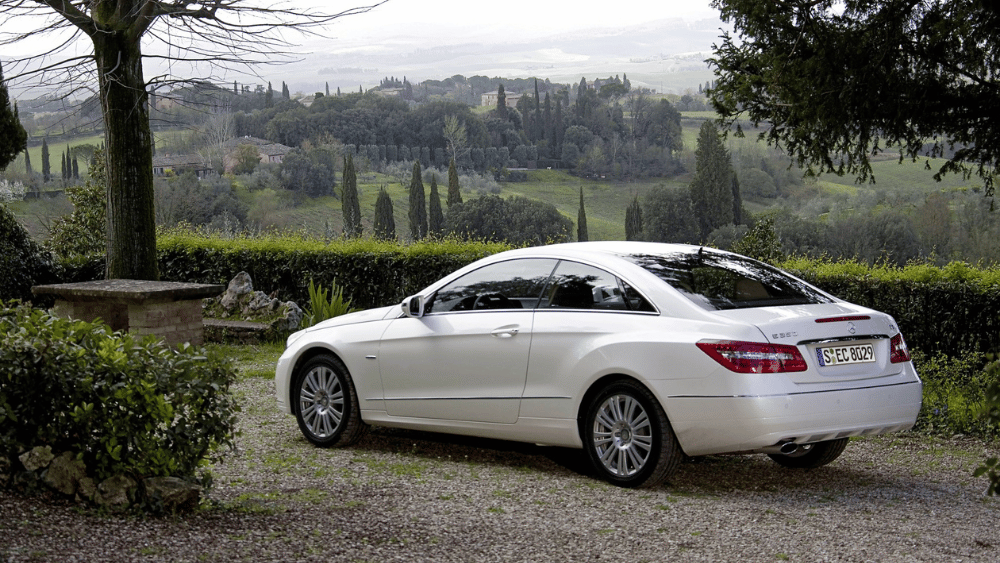
1. Mercedes E-Class
The Mercedes E-Classis a luxurious upper-class saloon that has been the definition of comfort and prestige for years. The plug-in hybrid version takes the car to a higher level. Thanks to the 25 kWh battery you'll cover up to 106 km without burning a drop of petrol. Heading off on a longer journey? No worries, the two-litre turbo engine with 204 HP lets you cover a distance of up to 560 km. If, when choosing a hybrid car, you don't want to give up the highest standard, the Mercedes E-Class is a car that will interest you.
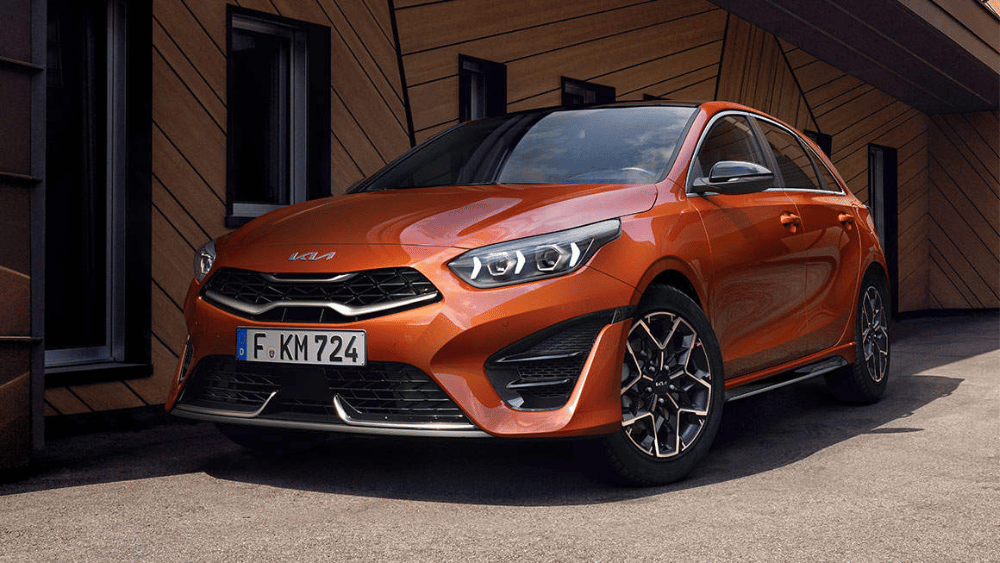
2. Kia Ceed
Another popular choice is the KIA Ceedplug-in. It's widely known that the Korean manufacturer stands out when it comes to producing hybrid vehicles. Fitted with a slightly smaller 1.6 l engine, it will easily cover 60 km on electric power alone. It's worth noting that thanks to the use of recuperation the car burns about 20–30% less fuel, even without charging the battery*. An additional advantage is the 7-year manufacturer's warranty that covers all KIA cars.
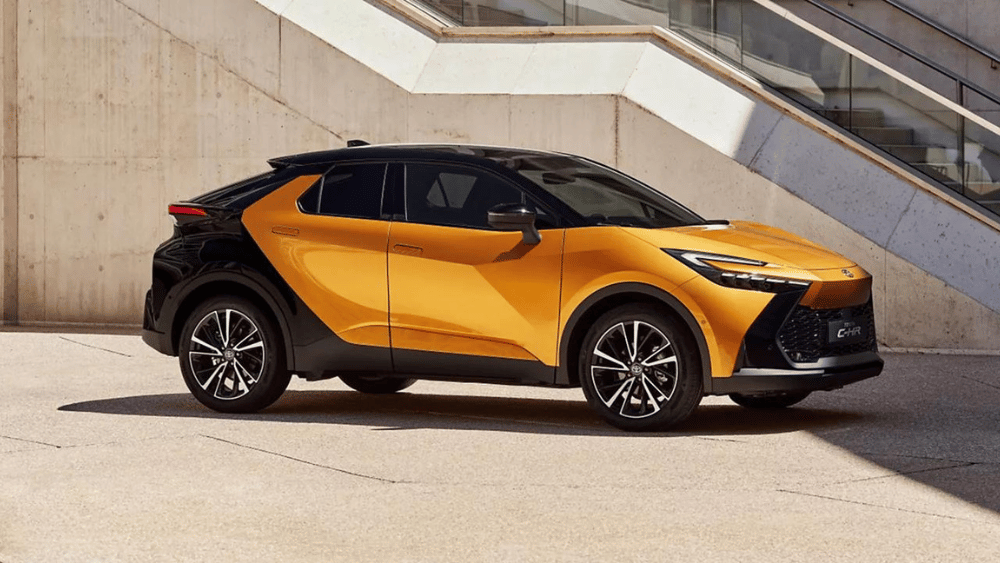
3. Toyota C-HR
The Toyota C-HR 1.8 Hybrid is a hybrid car in a similar price bracket to the KIA. Note that it was Toyota that introduced the first hybrid car into series production, namely the Prius model. The Japanese manufacturer undoubtedly has experience in using this type of engine, you can feel it during your first drive in the Toyota C-HR, equipped with an excellent recuperation system and intelligent switching between fuel and battery power.
Not just petrol hybrids, hydrogen-powered cars (FCEV)
The sight of a hybrid or an electric car no longer surprises anyone. Car manufacturers are setting themselves the next challenge to tame, namely hydrogen fuel. For a long time it was considered the fuel of the future. The reason for this is its high calorific value and zero emissions, resulting from the fact that the product of combustion is water.
Although using hydrogen was associated with problems in storing and obtaining it, this did not discourage the engineers. The first models from, once again the market-leading, Toyota have already appeared on Polish roads.The Mirai, as the model is called, is already available in our country. Admittedly, for now the only charging station is in Warsaw, but the Japanese manufacturer assures that more will appear soon.
How do hydrogen cars work? They use the combustion of the lightest element to charge the battery, in order to then move with the help of an electric motor.